Personal finance dashboard
One view of money that lives in two countries.
I couldn't find a tool that showed my UK and US finances in one place, so I made one with Claude.
My job is understanding what people need and why existing products fall short. This time the person was me.
With some tinkering I've made a personal finance dashboard that replaces my old apps-and-spreadsheet routine. I can actually see my transactions and balances across banks, investments and loans, across countries and currencies. I use it every day.
I've evolved it to answer the questions I actually ask:
- What's my financial position right now?
- How has it changed, and why?
- Where is my money actually going?
- Can I stop working?
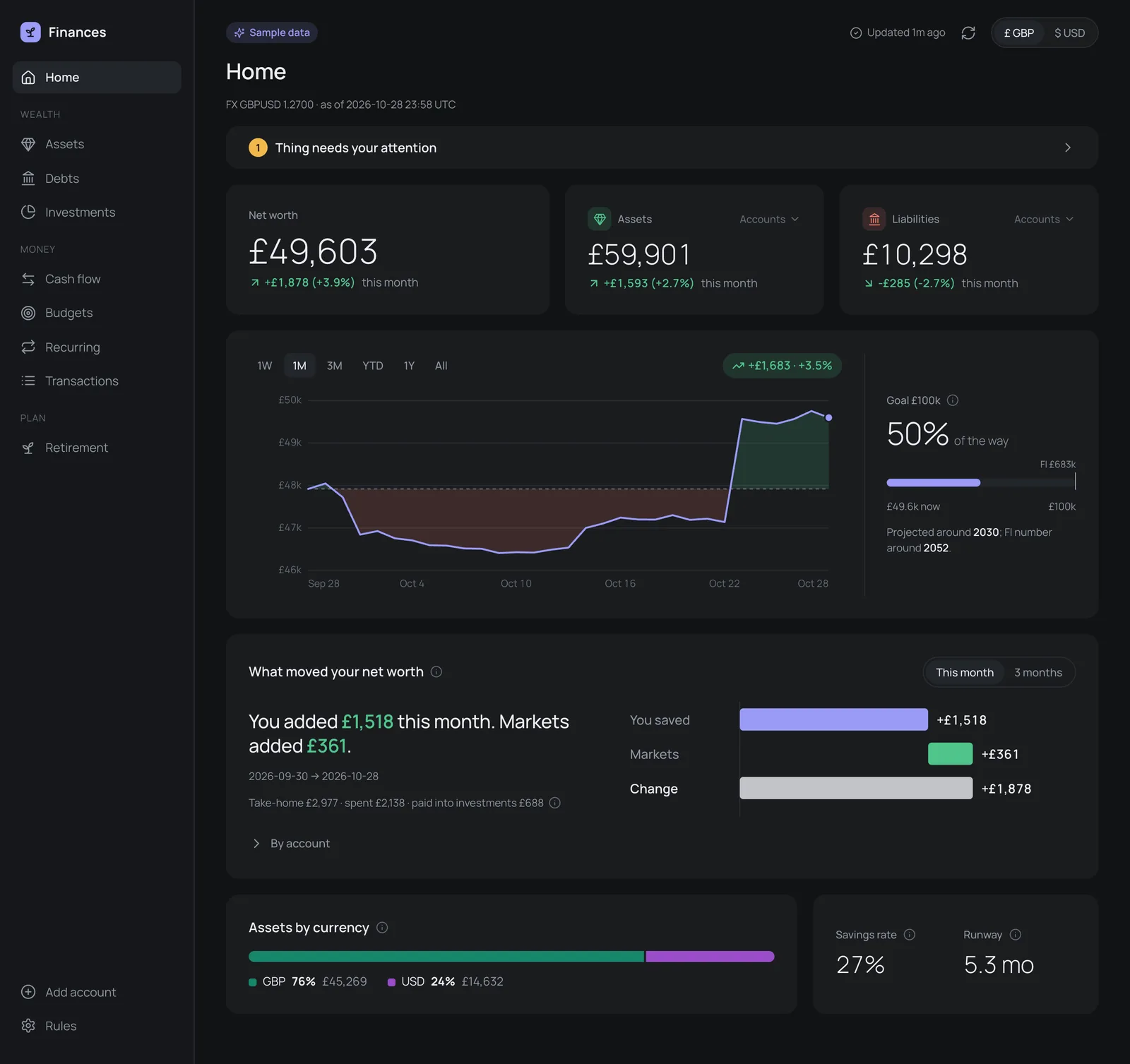
Most tools assume (fairly) a single country
I'm split between the UK and the US. So I've got current (checking? chequing?) accounts in GBP and USD, a workplace pension in pounds, the equivalent in dollars, loans scattered about, and so on.
US net worth trackers like Empower (or Personal Capital, or whatever they call themselves now) are excellent at portfolio breakdowns and asset allocation, but can't see UK accounts. UK apps can be excellent at spending and budgeting, but mostly make you pay. And in my experience they don't offer much insight into money outside the UK either.
So the most basic question, "what am I worth?", meant reconciling different apps and statements in a spreadsheet. Which was fine.
What I built
A private web app that runs on my own laptop. It connects to my accounts through bank APIs.
Net worth
A high-level number is cool enough, but it also shows what the markets did, so a good month and a lucky month look different.
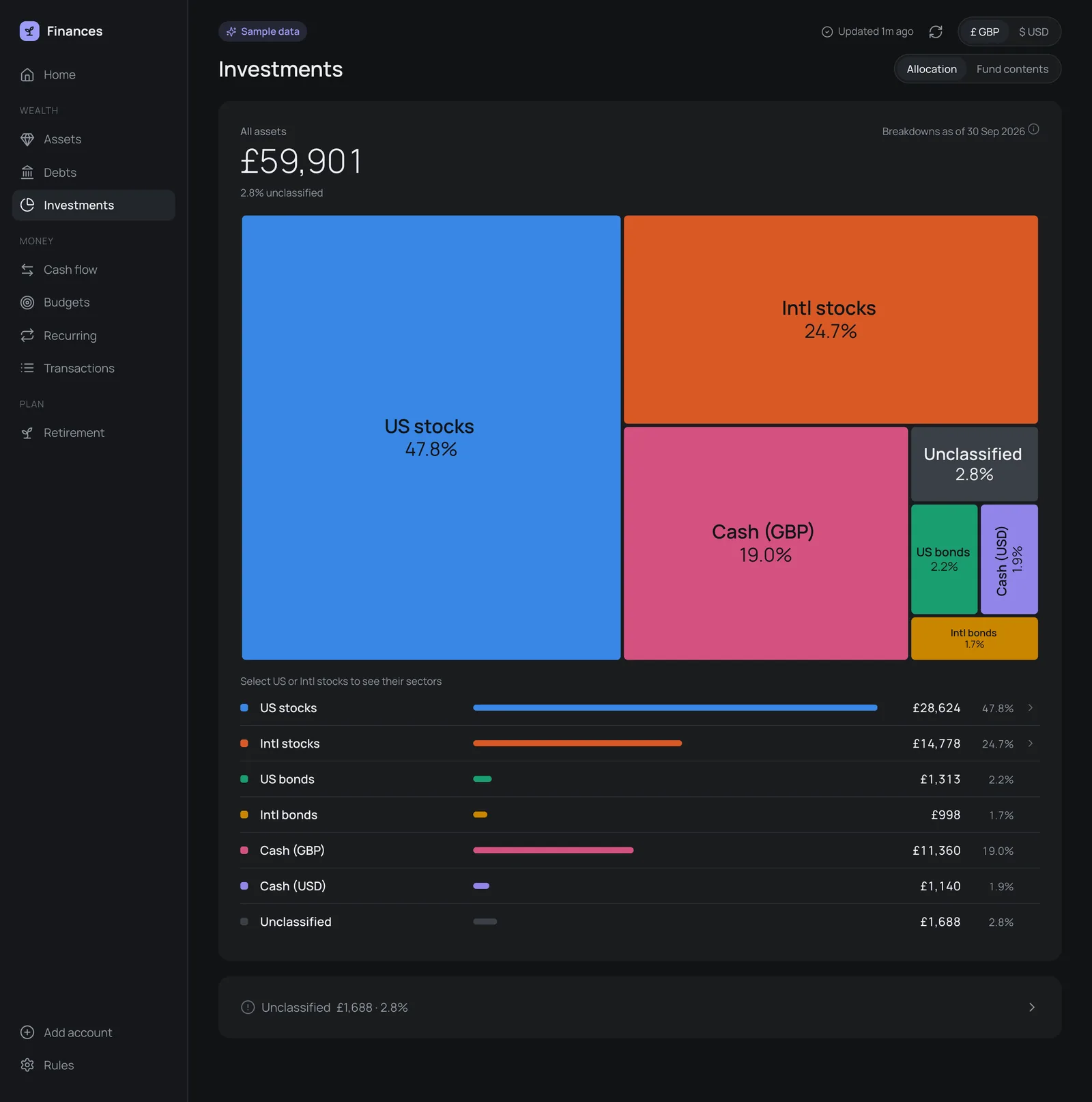
What I actually own
Every fund is broken down into US stocks, international stocks, bonds and cash, across both countries. Will I actually make any adjustments based on this? TBD.
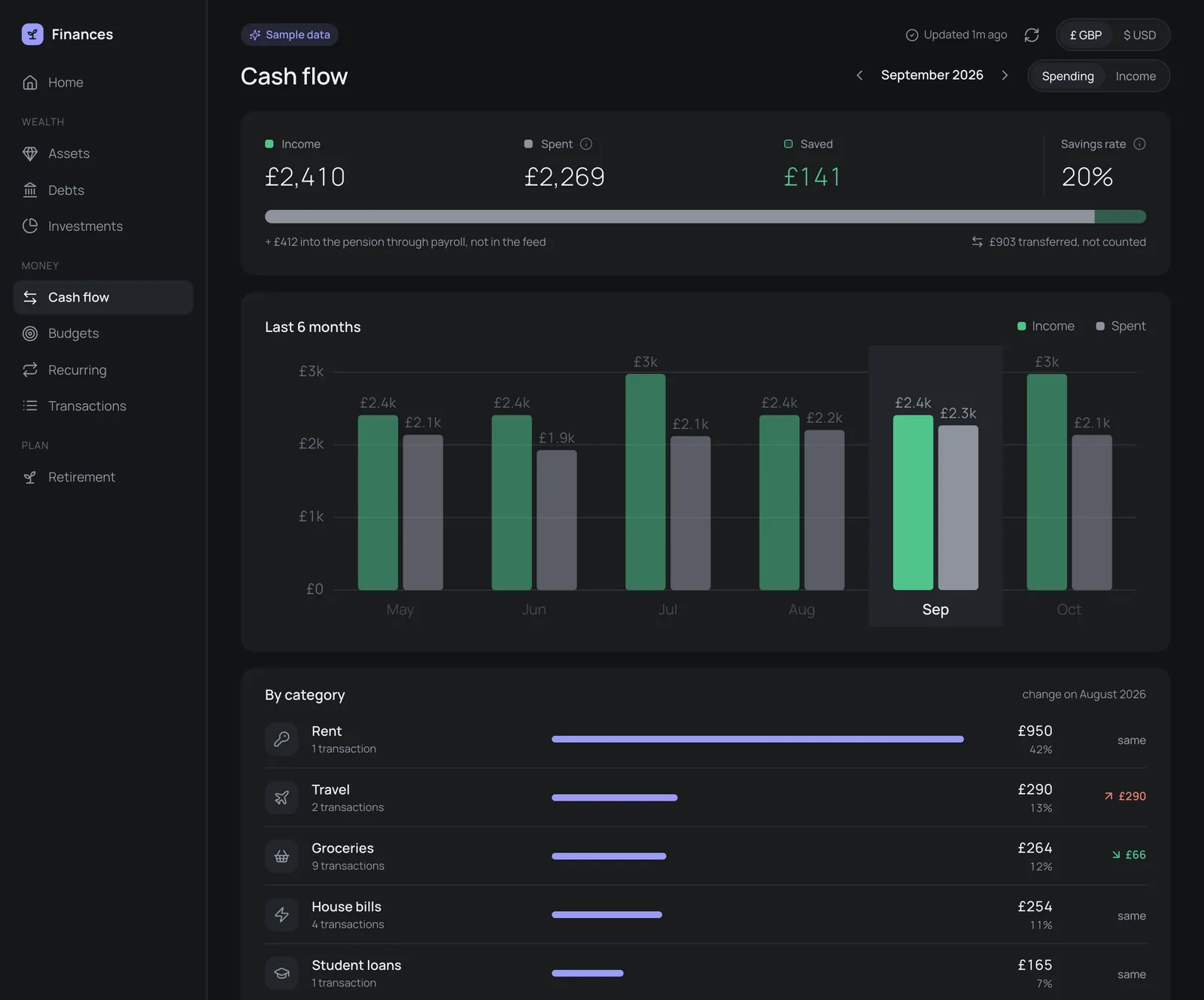
Where the money goes
Transactions from both countries are reconciled into one set of categories. Monzo and Plaid bring them in securely over their APIs.
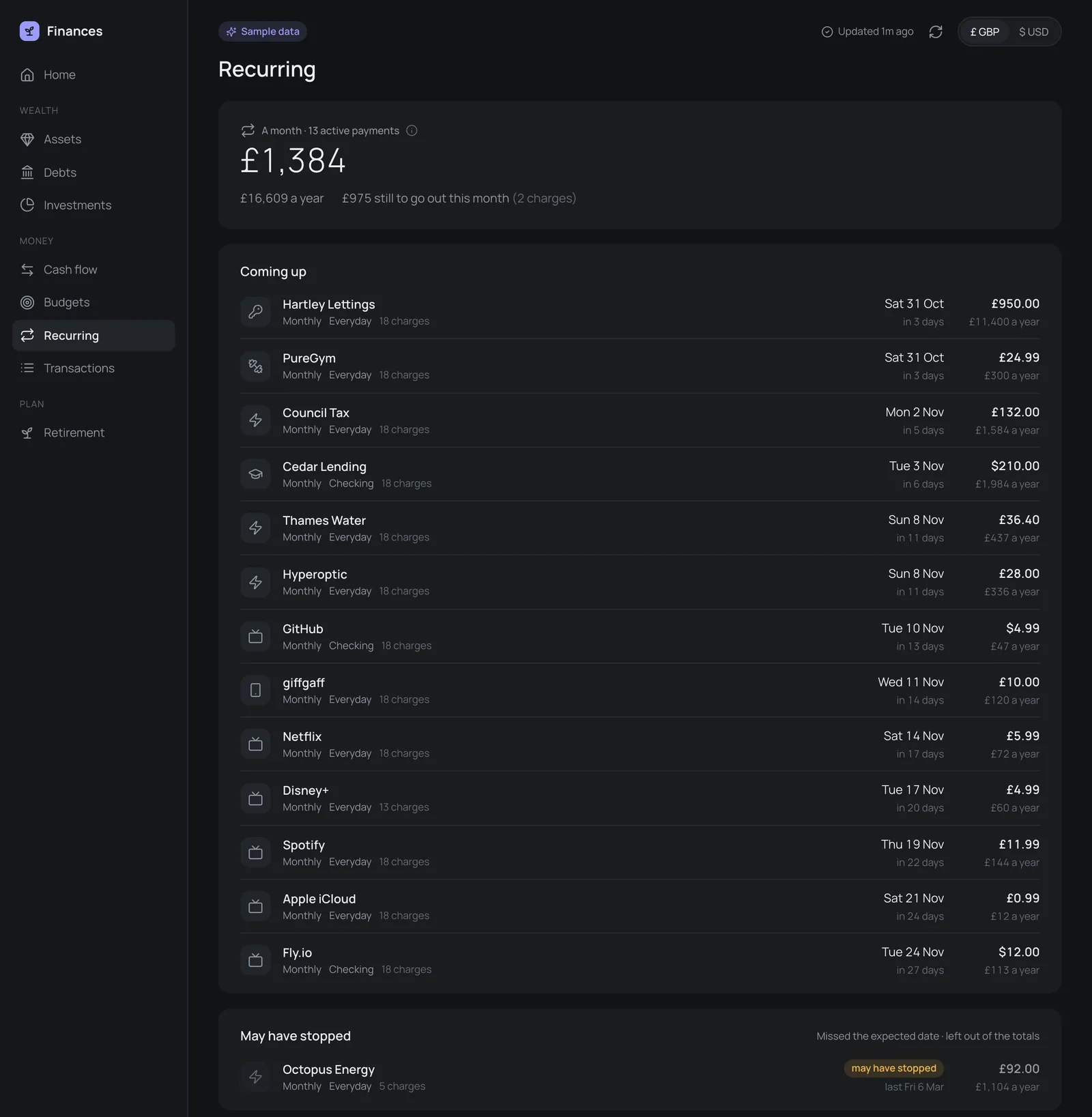
Monthly budgets show what's on track and what's over. Subscriptions are detected automatically.
When could I stop?
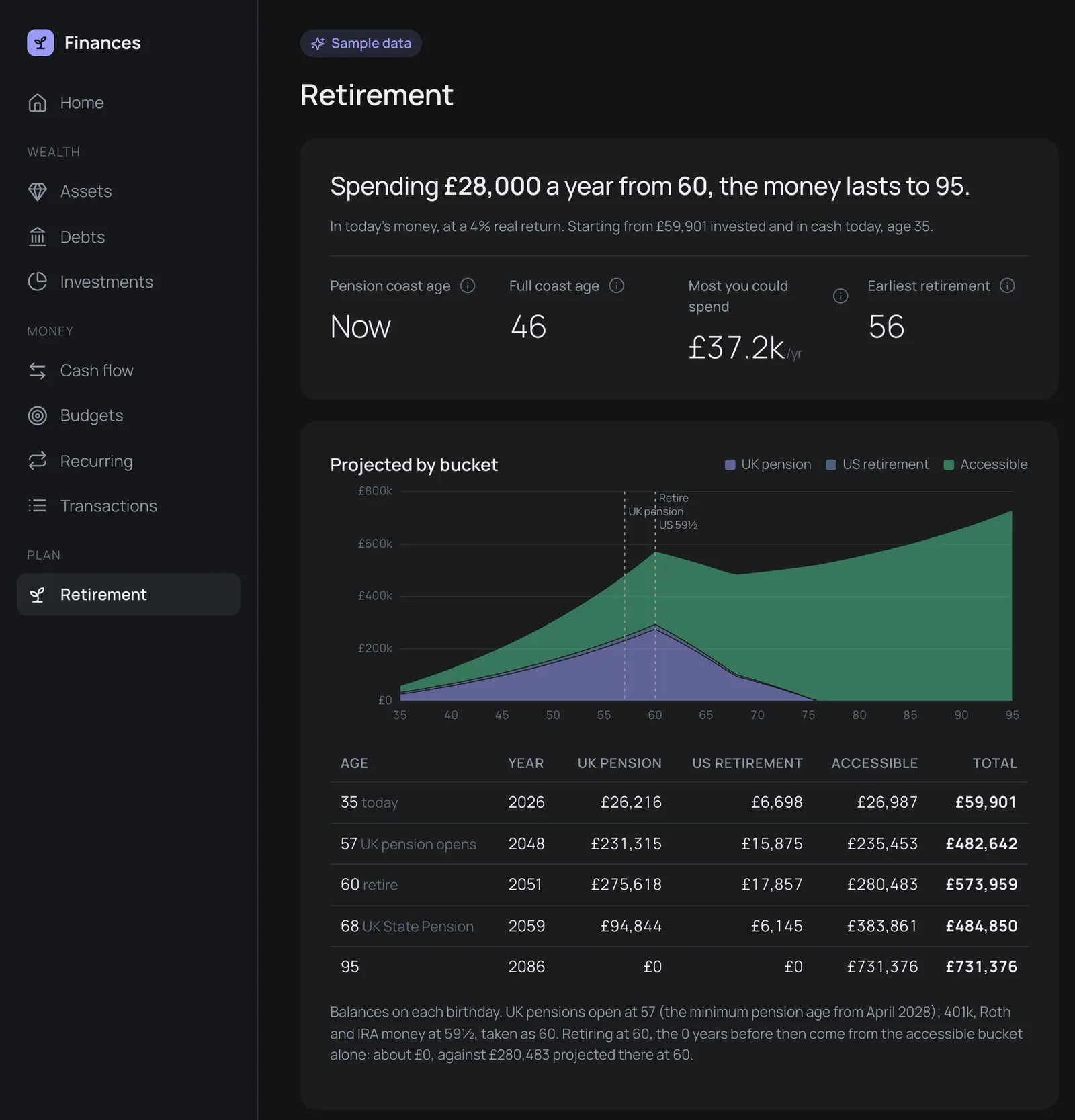
A retirement planner models UK and US retirement accounts separately, because they unlock at different ages. It answers the question I mostly care about: when can I stop working, or at least stop saving? Probably never, but it's cool to imagine.
Questions about it, or something similar you're working on?
Message me on LinkedIn